GM Revolutionizes Car Production with VR and AI
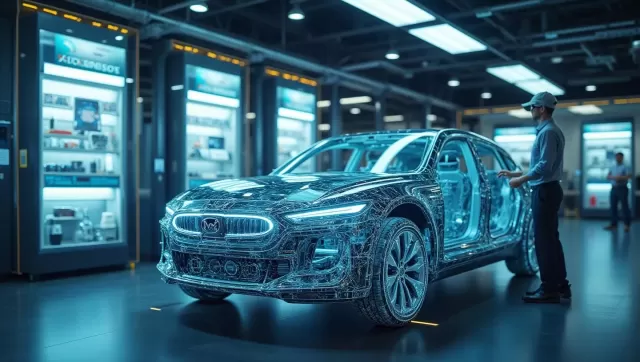
General Motors is revolutionizing its vehicle production process using cutting-edge virtual reality and artificial intelligence technologies. This innovative approach allows the company to identify and resolve potential manufacturing issues early on, saving significant time and resources.
Virtual Vehicle Construction: A Game Changer
GM's Virtual Reality Assembly Center (VRAC) is at the heart of this transformation. This 10,000-square-foot facility, located in Warren, Michigan, serves as a virtual playground where engineers and manufacturing employees can collaborate on vehicle designs years before physical prototypes are even built. This virtual environment is so realistic that it even includes details like microwaves in the virtual plant breakrooms.
The VR program launched in 2022 and is now an integral part of GM's vehicle development process. Through virtual build events, employees from across GM's operations come together to refine techniques and address any potential problems in pre-production vehicles.
This approach offers several key advantages:
- Early Issue Detection: GM has already identified and fixed hundreds of issues without needing to build a single physical vehicle.
- Reduced Travel Costs: Virtual collaboration eliminates the need for expensive and time-consuming travel.
- Improved Efficiency: Problems are identified and resolved in a virtual setting, minimizing disruptions to the actual manufacturing process.
AI Integration: Enhancing the Virtual Experience
The integration of artificial intelligence (AI) is further enhancing GM's virtual vehicle construction process. AI algorithms analyze vast amounts of historical data to provide real-time insights and solutions to potential manufacturing challenges.
This allows engineers to leverage past learnings and avoid repeating mistakes. The AI system can quickly identify similar issues that GM has encountered in the past and recommend effective solutions.
Ergonomic Considerations: Prioritizing Worker Safety
GM's virtual reality program also prioritizes worker safety. By using motion capture suits and ergonomic modeling, the company can assess the potential strain and injury risks associated with different assembly tasks.
This allows GM to design manufacturing processes that are safe and comfortable for workers of all sizes and abilities. The company uses data based on the 95th percentile male body and 50th percentile female to validate the jobs, ensuring inclusivity.
Shifting Roles: Adapting to New Technologies
The adoption of virtual reality and AI has led to a shift in the roles of some GM employees. As prototype construction becomes less reliant on physical fabrication, some workers have been transitioned to other departments where their technical expertise is highly valued.
GM is also hiring skilled trade workers from dealership service departments, providing them with the necessary training to excel in the virtual reality program. These employees bring valuable experience and problem-solving skills to the team.
The Future of Vehicle Manufacturing
GM's virtual reality program represents a significant step forward in the evolution of vehicle manufacturing. By embracing these innovative technologies, the company is able to:
- Reduce costs
- Improve efficiency
- Enhance worker safety
- Accelerate product development
As virtual reality and AI continue to advance, they are likely to play an even greater role in shaping the future of the automotive industry. GM's commitment to these technologies positions the company as a leader in this rapidly evolving landscape.
The VR system creates simulated physics, meaning components act and react as they would in the real world. This level of realism is crucial for identifying potential assembly issues. Experienced assembly workers, even with computer-generated solutions, can use their real-world knowledge to assess the feasibility of certain actions, based on their experiences.
GM leverages computer-aided design (CAD), 3D models that have been used since the 1990s, to inspire the virtual system with accurate measurements and angles. GM uses both virtual reality with fully immersive headsets and augmented reality through clear glass HTC Vive headsets.
The company also works with service experts who can express possible issues with repairs, ensuring that vehicles are not only easier to build, but more serviceable for consumers.
AI is applied to look into the company's data accumulated from a century of car production and ensure that the same problems are not being worked out repeatedly. This saves time and ensures GM employees are working as efficiently as possible.